How to Pass the Duolingo English Test: Tips and Preparation Guide
The Duolingo English Test (DET) is an English proficiency test accepted by many educational institutions around the world. It allows students to demonstrate their English language skills through an online test that can be taken from home, subject to the test's technical and room requirements.
For Bangladeshi students planning to study abroad, preparing for the Duolingo English Test can be an alternative to taking other English language exams, depending on the university and course requirements.
Although there is no single passing score for every institution, understanding the test format and practising consistently can help you work towards your target score.
What Is the Duolingo English Test?
The Duolingo English Test assesses a student's ability to understand and use English. It evaluates skills including reading, writing, listening, and speaking through a computer-based assessment.
The test uses an adaptive format, meaning the difficulty of some questions changes based on your responses.
Scores are reported on a scale of 10 to 160. The score required for admission depends on the university, programme, and degree level.
What Score Do You Need to Pass?
The Duolingo English Test does not have one universal passing score.
Different universities set their own minimum requirements. Some programmes may require a higher score than others, and certain courses may have additional English language conditions.
Before preparing for the test, identify your target universities and check their current requirements.
Set your target score slightly above the minimum where practical. This can provide some flexibility if a university's requirements change or if your preferred course has a higher threshold.
Understand the Test Format
Before starting your preparation, become familiar with the types of tasks included in the test.
You may encounter activities that assess your ability to:
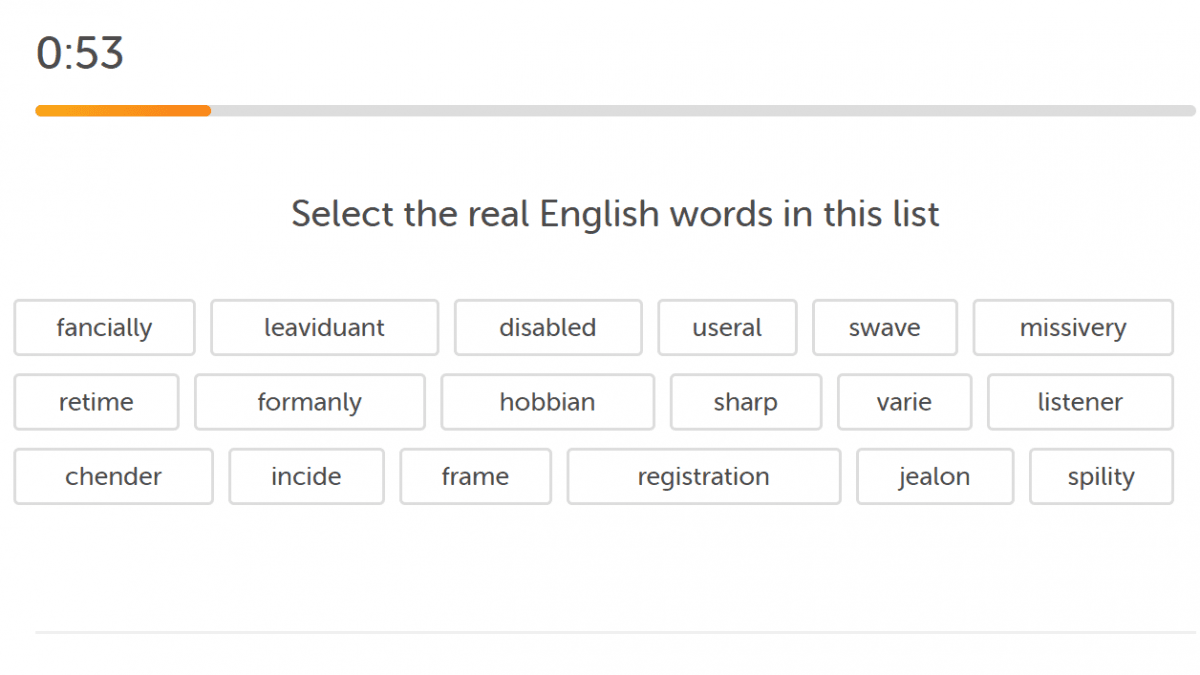
Read and identify English words
Complete sentences
Listen and type what you hear
Read passages and answer questions
Describe images
Speak about a topic
Write responses in English
Summarise or discuss written and spoken information
The exact task sequence and format can change, so practise using current preparation materials and sample questions.
1. Build Your English Vocabulary
A strong vocabulary helps you understand reading passages, follow spoken English, and express ideas more clearly.
To improve your vocabulary:
Learn a small number of useful words every day.
Study words in sentences instead of memorising isolated definitions.
Read short articles and identify unfamiliar vocabulary.
Practise using new words in your own sentences.
Review previously learned words regularly.
Focus on understanding how words are used in context. This is more useful than memorising long word lists without practising them.
2. Improve Your Grammar
Grammar helps you communicate ideas accurately in both speaking and writing.
Focus on areas such as:
Verb tenses
Subject-verb agreement
Articles
Prepositions
Sentence structure
Pronouns
Conjunctions
Punctuation
Practise writing short paragraphs and check them for grammar mistakes.
You should also practise speaking in complete sentences. Avoid making every answer unnecessarily complicated. Clear, accurate English is more valuable than using difficult words incorrectly.
3. Practise Listening Every Day
Listening practice helps you recognise words, understand different accents, and follow spoken information.
You can improve your listening skills by:
Listening to English conversations.
Watching educational videos in English.
Listening to short audio recordings.
Writing down sentences you hear.
Checking which words you misunderstood.
Repeating difficult recordings where possible.
Try to understand the meaning of the whole sentence instead of focusing on individual words alone.
4. Improve Your Reading Speed
The test may require you to read and understand information within a limited amount of time.
Practise reading short English passages and identifying the main idea.
Useful techniques include:
Reading the question carefully.
Looking for key information.
Understanding words from context.
Identifying the main idea of a paragraph.
Avoiding repeated reading when it is unnecessary.
Practising with a timer.
Accuracy matters, so do not increase your reading speed at the expense of understanding.
5. Practise Speaking Naturally
Speaking tasks can feel challenging if you are not used to answering questions aloud.
To prepare, practise talking about familiar topics such as your education, hobbies, daily routine, favourite places, and future goals.
Try to:
Speak clearly and at a natural pace.
Organise your ideas before answering.
Use complete sentences.
Give relevant examples.
Maintain consistent fluency.
Avoid memorising entire responses.
Recording yourself can help you notice unclear pronunciation, repeated words, long pauses, and grammar mistakes.
6. Develop Your Writing Skills
Writing practice helps you express ideas clearly under time pressure.
Choose familiar topics and write short responses. After writing, check whether your answer addresses the question and whether the ideas follow a logical order.
Focus on:
Clear sentence structure
Relevant examples
Correct grammar
Appropriate vocabulary
Logical organisation
Spelling and punctuation
Avoid adding unnecessary information simply to make your answer longer. Your response should be relevant and easy to understand.
7. Practise Describing Images
Some DET tasks may ask you to describe an image in writing or speaking.
Start by identifying the main subject, setting, activities, and important details.
A useful approach is to:
State what the image mainly shows.
Describe the people, objects, or setting.
Mention relevant actions or details.
Explain the overall scene clearly.
Do not invent details that cannot reasonably be seen in the image. Focus on observations you can describe accurately.
8. Take Practice Tests
Practice tests help you become familiar with the format and identify areas that need improvement.
After each practice session, review your mistakes rather than immediately taking another test.
Ask yourself:
Which question types were difficult?
Did I misunderstand the instructions?
Was my answer grammatically correct?
Did I manage my time effectively?
Did I struggle with vocabulary or listening?
Which skills should I practise next?
Use the results to create a study plan that focuses on your weakest areas.
9. Prepare Your Computer and Test Environment
Because the Duolingo English Test is taken online, technical preparation is important.
Before the test, review the current test rules and make sure your equipment and environment meet the requirements.
Check that you have:
A compatible computer
A working camera
A working microphone
A stable internet connection
Appropriate lighting
A quiet, private room
Valid identification
A charged laptop or reliable power supply
Follow the test instructions carefully. Unapproved assistance, prohibited devices, or violations of the testing rules can lead to problems with your result.
10. Manage Your Time During the Test
Time management can help you respond calmly and avoid spending too long on one task.
Before answering, make sure you understand what the question asks. Follow the instructions and use your available time to produce a clear, relevant response.
Avoid rushing through every question. At the same time, do not spend too long trying to make one answer perfect.
Regular timed practice can help you find a comfortable balance between speed and accuracy.
A Simple 7-Day Duolingo English Test Preparation Plan
If your test is approaching, the following plan can help organise your revision.
Day 1: Understand the format
Review the test structure and complete a practice session to identify your strengths and weaknesses.
Day 2: Vocabulary and grammar
Review useful vocabulary, sentence structure, verb tenses, and common grammar errors.
Day 3: Listening and reading
Practise understanding spoken English and reading short passages under time limits.
Day 4: Speaking
Record answers to familiar questions and review clarity, fluency, grammar, and organisation.
Day 5: Writing
Practise short written responses and review vocabulary, spelling, grammar, and relevance.
Day 6: Full practice session
Complete a realistic practice test and analyse your mistakes.
Day 7: Final review
Review your weak areas, check your equipment, and make sure you understand the current test rules. Avoid exhausting yourself with excessive last-minute practice.
Adjust this plan according to your current English level and the time available before your test.
How Long Should You Prepare?
The preparation time depends on your current English proficiency and target score.
Students who already use English regularly may need less preparation than those who are still developing basic grammar, vocabulary, listening, and speaking skills.
Start by assessing your current level. Then create a schedule that gives you enough time to practise the skills that need the most improvement.
A consistent daily routine is generally more useful than trying to learn everything in a single day.
Common Mistakes to Avoid
Avoid these mistakes when preparing for the Duolingo English Test:
Taking the test without understanding its format.
Memorising answers instead of developing English skills.
Ignoring grammar and sentence structure.
Practising only reading and neglecting speaking or listening.
Using complicated vocabulary incorrectly.
Skipping practice tests.
Ignoring the technical requirements.
Assuming one score is accepted by every university.
Breaking test rules or seeking unauthorised assistance.
Booking the test without checking university deadlines.
Preparation should focus on improving your English and becoming comfortable with the test format.
Is the Duolingo English Test Accepted by Universities?
Many universities accept the Duolingo English Test, but acceptance is not universal.
A university may accept DET for certain programmes but not others. Minimum scores and additional requirements can also differ by degree level and intake.
Before booking your test, confirm:
Whether your chosen university accepts DET.
The minimum score required for your course.
Whether any individual skill requirements apply.
Whether the score will be valid for your intended intake.
Whether any separate immigration or institutional English requirements apply.
Do not assume that acceptance by one university means every institution will accept the same result.
How NWC Education Can Help
NWC Education can guide Bangladeshi students who are preparing to study abroad and need help understanding university admission requirements.
Support may include:
Exploring suitable universities and courses
Understanding English language requirements
Checking whether DET may be accepted
Reviewing academic qualifications
Preparing university applications
Organising required documents
Understanding student visa procedures
The appropriate test and target score depend on your chosen institution, programme, and academic background. Confirm the requirements before booking your exam.
Frequently Asked Questions
Is there a passing score for the Duolingo English Test?
There is no universal passing score. Each university or programme sets its own requirements.
What is the Duolingo English Test score range?
The DET score scale ranges from 10 to 160.
Can I prepare for the DET in seven days?
You can use seven days to review the format and practise, but whether that is enough depends on your current English level and target score.
Can I take the Duolingo English Test from Bangladesh?
Students in Bangladesh can take the test online if they meet the current eligibility, equipment, identification, and testing-environment requirements.
Do all universities accept the Duolingo English Test?
No. Acceptance and minimum score requirements vary by university, programme, and intake.
Is the DET easier than IELTS?
The tests use different formats, so difficulty depends on your English skills and test preferences. Compare the requirements and formats before choosing an exam.
Prepare for Your Duolingo English Test with a Clear Plan
Preparing for the Duolingo English Test requires consistent practice, a good understanding of the test format, and a clear target score. Improving vocabulary, grammar, reading, listening, speaking, and writing can help you approach the exam with greater confidence.
If you are planning to study abroad from Bangladesh and need guidance on DET acceptance, university requirements, and your application options, you can Apply Now with NWC Education to discuss your study plans.